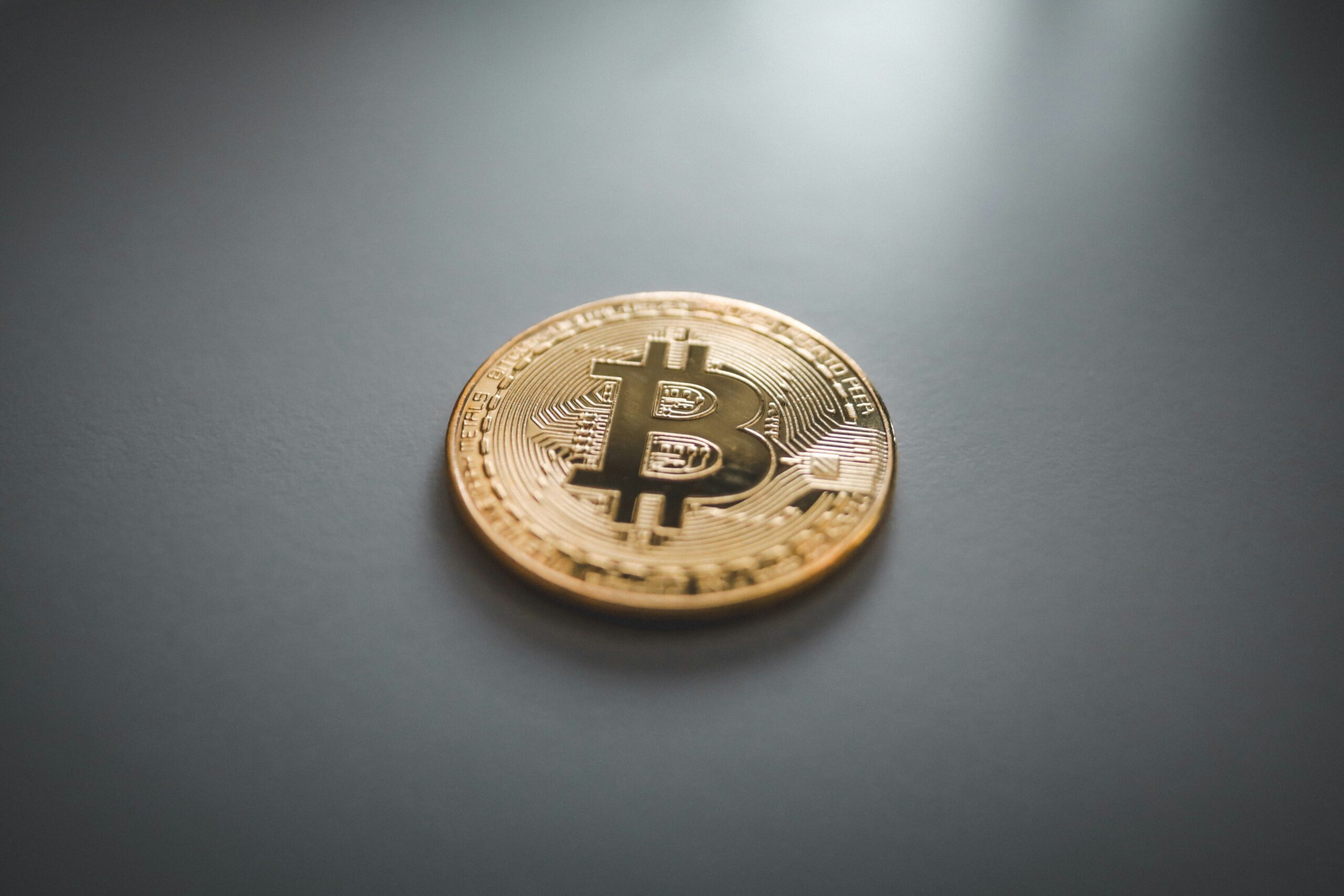
Bitcoin, the largest cryptocurrency, has evolved from a once-new technology to a headline-grabbing financial asset.
Should you get involved now?
This guide will help you understand whether investing in Bitcoin aligns with your financial goals, risk profile, and future-forward thinking.
➡️ What is Bitcoin?

Bitcoin as a Digital Currency
Bitcoin is a decentralized digital currency powered by blockchain technology. It is first created in 2009 by ‘Satoshi Nakamoto’ whom identity is still unknown.
Apart from Bitcoin, there are 3000+ cryptocurrencies in the marketplace.
For this article, the focus will solely be on Bitcoin. To read about other cryptocurrencies, do check out our Blog – Cryptocurrencies section.
Bitcoin can be used as a medium of exchange (in place of paper currency).
Unlike fiat currencies, it’s not controlled by a government or central bank.
It is border-less and permission-less.
Anyone can use Bitcoin to carry out transactions anywhere in the world without going through a financial institution and opening a bank account. All you need is internet connection.
If you want to send money to someone living in another country, sending Bitcoin is much faster and much cheaper than sending fiat currencies through a foreign remittance service provider.
The average time to complete a Bitcoin transaction is 10 minutes (this can vary depending on network activity and transaction fees).
How is Bitcoin created?
Bitcoin is created through a process called mining, which involves powerful computers solving complex mathematical problems.
These problems are part of the Bitcoin network’s system for verifying and recording transactions on a public ledger called the blockchain.
When a computer successfully solves one of these problems, it earns the right to add a new “block” of transactions to the chain—and as a reward, the miner receives newly created Bitcoins.
This process happens roughly every 10 minutes and is how new Bitcoins enter circulation, with a fixed supply limit of 21 million coins to maintain scarcity and value over time.

➡️ Is Bitcoin a good investment?
Reason 1: Fastest Growing Asset Class
Bitcoin is the fastest-growing asset in history, having surged from virtually zero value in 2009 to a market capitalization of over $1 trillion within just 12 years—a feat no other asset has achieved in such a short time.
By comparison, it took Microsoft over 44 years and Amazon 24 years to reach the same milestone.
While Bitcoin’s price swings might be highly volatile which might deter conservative investors, it also presents opportunity for outsized returns. Think of it more like a tech startup in your portfolio—high-risk, high-reward.
Historical data shows that despite the volatility, Bitcoin has outperformed most traditional assets over the past decade.
10-year Returns Comparison across different assets (2014 to 2024):
| Bitcoin performance: | +26,931.1% |
| US S&P500 stocks performance: | +193.3% |
| Gold performance: | +125.8% |
📈 What If You Invested $10,000 in Bitcoin?
| Year of Investment | BTC Price at Time | BTC Purchased | Value in Q3 2024 pre-Donald Trump’s election (~$68,000) | ROI |
|---|---|---|---|---|
| 2011 | ~$1 | 10,000 BTC | $680,000,000 | +6.8M% |
| 2013 | ~$100 | 100 BTC | $6,800,000 | +67,000% |
| 2015 | ~$250 | 40 BTC | $2,720,000 | +27,000% |
| 2017 | ~$1,000 | 10 BTC | $680,000 | +6,700% |
| 2020 (Pre-Bull Run) | ~$10,000 | 1 BTC | $68,000 | +580% |
| 2022 (Bear Market) | ~$20,000 | 0.5 BTC | $34,000 | +240% |
| 2023 (Mid-Year) | ~$30,000 | 0.33 BTC | $22,400 | +124% |
| 2024 (Early) | ~$40,000 | 0.25 BTC | $17,000 | +70% |
Reason 2: Hedge against Inflation
As global markets fluctuate and central banks print more currency, Bitcoin is being considered a legitimate store of value by major financial entities.
Bitcoin’s limited supply and decentralized nature make it attractive as a hedge against inflation – similar to gold, but more portable and liquid.
Inflation refers to an increase in the prices of goods and services across the overall economy – leading to a decline in purchasing power.
Due to inflation, a $100 bill today will be worth less than $100 next year, because everything is getting more expensive as each year goes by.
In order to purchase an item that costs $1000 today, you will need to spend almost $1500 to buy the same item 10 years later, assuming an annual inflation rate of 4%. That is a 50% increase.
Why does inflation happen? It depends on money supply versus money demand.
When money supply increases, consumers have more cash to spend thus they will buy more goods and services. This increased demand will drive up the prices of the same goods and services – causing inflation.
Central banks can print paper currency in unlimited amounts.
During the COVID-19 pandemic, central banks across the world resorted to printing money in order to boost their countries’ economies and prevent a recession from happening.
This resulted in inflation leading to higher prices – as observed in the US economy throughout 2020-2022.
Inflation led to higher interest rates set by the central bank to dampen prices.
Higher interest rates hinder economic growth which leads to a decline in company earnings and weak stock market performance.
For Bitcoin, only 21 million coins will ever exist, with the last one being created in the year 2140.
There is no feasible way to create additional Bitcoins beyond this amount as the creation is programmed earlier on.
This scarcity feature enabled Bitcoin to gain credibility as “digital gold” – effectively acting as a hedge against inflation.
Reason 3: Global Market Adoption has been Growing

Bitcoin is not just a meme anymore.
And defintely not a financial scam in itself.
In January 2024, US financial regulators approved all 11applications for spot bitcoin ETFs.
Traditional financial institutions like BlackRock (the world’s largest fund manager), Grayscale and Fidelity have since launched their own Bitcoin and altcoin funds for investors.
Large companies such as Microstrategy and Tesla have invested sizeable amounts of their company’s earnings in Bitcoin.
Several governments have also actively supported the use of cryptocurrencies.
El Salvador became the first country in the world to use bitcoin as legal tender in 2021.
The latest US President – Donald Trump – is also very pro-crypto, pushing to introduce crypto-friendly legislations and crafting a larger role for crypto to play in the US financial system (including the creation of a Bitcoin strategic reserve fund for the country).
As adoption grows, the demand for Bitcoin will grow, and thus its value.
Thus, it is best to get yourself invested in Bitcoin as early as possible – before everyone else catches on.
Reason 4: Diversify your Investment Portfolio
Diversification is a golden rule in investing – but how does a volatile digital asset like Bitcoin fit into a well-balanced portfolio?
One of Bitcoin’s most compelling features as an investment is its historically low correlation with traditional markets like equities and bonds. In plain terms, Bitcoin often moves independently from major asset classes.
This means when the stock market declines due to a financial market crisis or geopolitical instability, Bitcoin doesn’t necessarily follow.
For example, In March 2023, the U.S. faced its worst banking turmoil since 2008.
This is caused by an increase in interest rates as a result of decades-high inflation – an aftermath of the central bank printing US dollars to revive the economy during the COVID-19 pandemic.
Several major institutions collapsed or faced distress, including:
- Silicon Valley Bank (SVB)
- Signature Bank
- Credit Suisse (globally, though based in Switzerland)
As a result, bank stocks plummeted, with regional banks like First Republic and PacWest taking heavy hits. Investors feared contagion in the financial system and questioned the stability of fractional reserve banking.
While financial stocks were collapsing, Bitcoin’s price surged from ~$20,000 in early March 2023 to over $28,000 by the end of the month (a 40%+ increase).
It outperformed:
- US S&P 500 stocks: Flat to slightly positive during the same period.
- US Banking ETFs (e.g. KBE, KRE): Down 20%–30% or more.
BlackRock CEO Larry Fink said in March 2023 that the crisis highlighted “the need for digitized financial systems,” indirectly validating the role of crypto assets in the modern economy.
The 2023 banking crisis demonstrated Bitcoin’s unique positioning as a hedge against centralized financial failures.
When banks were closing doors, Bitcoin was open 24/7 and liquid – making it a powerful addition to a modern diversified portfolio.
➡️ How to Invest in Cryptocurrencies?
Step 1: Choose the Right Investment Vehicle
- Direct Purchase: Buy and hold Bitcoin through platforms like Binance, Coinbase, Bitget or Bybit.
- Bitcoin ETFs or Trusts: You can invest in Bitcoin managed funds which offer exposure without you needing to buy or sell cryptocurrencies directly.
Each method has different risks, fees, and custody implications.
If you want to buy Bitcoin or other Cryptocurrencies directly, you can signup for a Cryptocurrency account through this link.
If you are interested to invest in a Cryptocurrency Fund (passive investing), register your interest via this form.
Step 2: Set up a Crypto Wallet for Security and Storage
Unlike bank deposits, Bitcoin isn’t insured. That means security is your responsibility.
To keep your cryptocurrencies safe, you can choose to store them in a wallet:
- Hot wallets (e.g. mobile apps connected to the internet)
Leaving your cryptocurrencies on an exchange platform means you are keeping them in a hot wallet. This may carry higher risks as hackers may be able to access your wallet through the internet. - Cold wallets (e.g. hardware wallets like Ledger or Trezor)
These are safer – but you must not lose it physically and should never forget your password!
If you are serious about investing in cryptocurrencies, you should prioritize cold storage for long-term holdings and hot wallets for small, everyday use.
➡️ What Are the Risks?

1) Regulatory Uncertainty
Governments are still figuring out how to regulate crypto.
A single government’s policy can trigger a global sell-off and operational disruption.
While the U.S. has taken steps toward legitimizing it, future tax laws or restrictions could impact investors.
Example: China’s Complete Crypto Ban (2021)
- In 2021, China banned all cryptocurrency transactions and mining, citing concerns over financial stability and energy usage.
- This led to a sharp drop in Bitcoin’s price and forced major miners and exchanges to relocate operations overseas.
- It also created a liquidity vacuum as Chinese users had to exit the market abruptly.
Example: U.S. SEC Crackdowns on Exchanges (2023–2024)
- The U.S. Securities and Exchange Commission (SEC) sued major exchanges like Binance and Coinbase, alleging they offered unregistered securities.
- Several altcoins (e.g., Solana, ADA, Polygon) saw prices crash due to legal uncertainty over whether they qualify as securities.
- The SEC’s strict stance slowed new token launches and led to higher compliance costs.
2) Technological Risks and Hacking
While the Bitcoin network itself is secure, exchanges and wallets are not immune to cyberattacks.
| Type of Crypto CyberAttacks | Description |
|---|---|
| Exchange Hacks | Hackers breach centralized exchanges and drain customer wallets. |
| Phishing Attacks | Fraudulent websites or emails trick users into revealing private keys. |
| Malware/Keyloggers | Malicious software captures keystrokes or wallet credentials. |
| Smart Contract Exploits | Bugs in DeFi protocols allow hackers to steal funds. |
| SIM Swaps | Hackers gain control of your phone number to reset crypto login credentials. |
How to Protect Yourself from Crypto Cyberattacks:
| Best Practices | Why It Matters |
|---|---|
| Use Hardware Wallets (Cold Wallets) | Keeps your keys offline—immune to online hacking attempts. |
| Enable 2FA on All Accounts | Adds a second layer of protection against unauthorized logins. |
| Avoid Clicking Suspicious Links | Many scams come from fake emails or Telegram messages. |
| Never Share Your Seed Phrase | Not even with customer support—no one should ever ask for it. |
| Use Large & Reputable Exchanges | Choose large established and secure crypto platforms |
| Regularly Update Your Devices | Keep security patches and antivirus software up to date. |
Never leave large sums on exchanges and always enable two-factor authentication!
3) Market Manipulation and Hype Cycles
One of the key risks in cryptocurrency investing is its susceptibility to market manipulation and hype-driven cycles.
Unlike traditional markets, crypto is still lightly regulated in many regions, making it vulnerable to whales (large holders), influencers, and coordinated pump-and-dump schemes that can artificially inflate or crash prices.
Social media hype, celebrity endorsements, or sudden viral trends can cause speculative frenzies, leading inexperienced investors to buy at the peak and panic sell during crashes.
These extreme swings are often amplified by low liquidity in smaller tokens and the lack of institutional oversight.
While the volatility can present profit opportunities, it also means that emotions and speculation often drive short-term prices more than fundamentals, making careful risk management essential in any crypto portfolio.
Example: Terra (LUNA) & UST Collapse (2022)
The Terra ecosystem was promoted as a revolutionary stablecoin project, with UST (its algorithmic stablecoin) pegged to the dollar and LUNA used to stabilize it. It gained massive attention through social media hype, aggressive marketing, and yields of up to 20% APY on Anchor Protocol. At its peak, LUNA reached a market cap of over $40 billion.
In May 2022, a sudden depeg of UST triggered a death spiral, causing LUNA to collapse by over 99.99% in days, wiping out billions of dollars from retail investors.
🚨 Lesson: Overhyped ecosystems with unsustainable returns can collapse almost overnight.
Example: FTX and Sam Bankman-Fried (2022)
FTX, once one of the world’s largest crypto exchanges, and its founder Sam Bankman-Fried (SBF) were hailed as the future of crypto. The exchange sponsored global sports teams and celebrities, creating immense hype and trust.
However, in late 2022, FTX was revealed to have misused customer funds, leading to a liquidity crisis and eventual bankruptcy.
Eaxmple: Whale Dumps in Low-Cap Coins
Small-cap altcoins with low trading volumes are frequently targeted by whales or coordinated Telegram groups. These groups buy large quantities to inflate the price (pump), attract public attention, and then sell off suddenly (dump), crashing the price and leaving latecomers with steep losses.
Coins like Squid Game Token (SQUID) in 2021 rose 75,000% in a week before falling to near-zero after a rug pull.
➡️ Is Crypto Right for You?

Crypto can offer high growth potential, global diversification, and 24/7 market access.
But it also comes with high volatility, regulatory uncertainty, security risks, and extreme emotional swings.
Unlike traditional assets like stocks or real estate, crypto lacks mature regulation and intrinsic valuation models, making it more speculative and harder to analyze.
No two portfolios are the same. Here’s how to decide if Bitcoin aligns with your specific goals.
1) Define Your Investment Thesis
Why are you investing in Bitcoin?
- Speculative growth?
- Long-term hedge against fiat currency devaluation?
- Diversification strategy?
Clarifying your “why” will shape how much you invest, how long you hold, and what risks you’re willing to accept.
2) Know Your Risk Tolerance and Time Horizon
Bitcoin is volatile, and its value can dip 20–30% in a matter of days. If that would keep you up at night, you may want to limit your portfolio’s exposure or opt for more stable vehicles like Bitcoin funds.
Tip: The longer your time horizon, the less short-term volatility will impact your investment portfolio.
3) Integrate Crypto into a Balanced Portfolio
Bitcoin shouldn’t replace your entire portfolio. Rather, treat it like a satellite allocation around a solid core of diversified stocks, bonds, and alternative assets.
Including Bitcoin can act as a non-traditional diversifier that improves your portfolio’s risk-adjusted returns over time.
Sample allocation strategy:
- Core portfolio: 90% (stocks, bonds, real estate, etc.)
- Satellite (Bitcoin and crypto): 5%–10%
If you are worried about the high volatility of Bitcoin, a smart investment approach would be dollar-cost averaging (DCA) – investing a fixed amount regularly regardless of price. This removes emotional bias and spreads investment risk over time.
✅ Crypto May Be Right for You If:
- You’re comfortable with market volatility and short-term losses.
- You have a long-term investment horizon (5–10+ years).
- You’re willing to educate yourself and stay updated on the fast-evolving space.
- You’re looking to diversify a portion of your investment portfolio.
🚫 Crypto May Not Be Right for You If:
- You can’t afford to lose the money you invest.
- You panic easily or have a low risk tolerance.
- You’re nearing retirement and need capital preservation.
- You don’t have time or interest to follow the space.
🎯 Tip: If you’re unsure, start small. Even a 1–5% allocation can expose you to upside while keeping the rest of your portfolio stable.
Other than cryptocurrencies, you can also explore investment in the stock market – which has lower risk than crypto.
Check out our Stock Investment article!
➡️ What do You think about Bitcoin?
Investing in Bitcoin isn’t about chasing hype or betting on a lottery ticket. It’s about identifying a long-term asymmetric opportunity that could complement a modern, forward-looking portfolio.
You don’t need to become a full-on crypto investor that puts almost all your net worth in crypto, but staying on the sidelines entirely may be the bigger risk.
Key Takeaways:
- Bitcoin is a scarce, decentralized digital asset with growing institutional backing.
- It’s volatile, but its long-term returns have outperformed many traditional investments.
- You can invest directly or through traditional financial products like cryptocurrency funds.
- Risk management, security, and regulatory awareness are critical.
- A small, strategic allocation can enhance portfolio diversification.
⬇️ FREE: 14-day Crypto Investor Crash Course!


